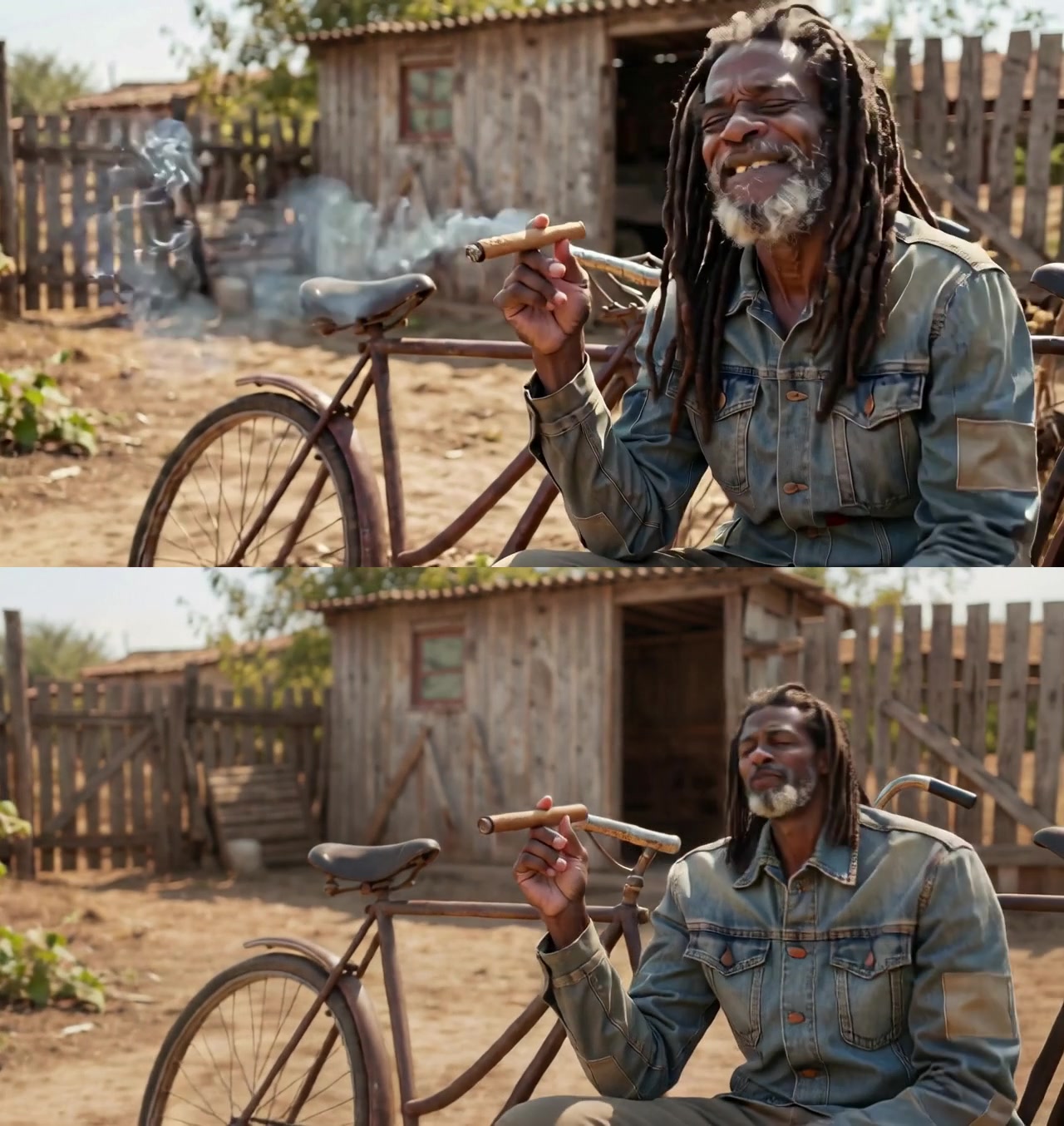
Another Mighty Useless Release
Nobody asked for a LoRA that shrinks heads. Nobody needed one. And yet here we are.
Tsantsalize is an IC-LoRA for LTX-2.3 that does one thing: makes the head of a person speaking ridiculously small. Think Beetlejuice's shrunken-head guy, but generated by a 22-billion-parameter video model that could have been used for literally anything else.
What it actually does
This IC-LoRA works on a video-to-video pipeline. You feed it a clip of someone talking, it shrinks their head. That's it. That's the product.
▶ Watch the LADY before/after demo
It works best on the kind of footage it was trained on — a single person speaking to camera — and the sweet spot for strength is 1.2. Push it higher and the face starts drifting into someone else's.
Trigger word: tsantsalize. Adding tiny head to the prompt can help steer it.
The training death-march
The original plan was more ambitious: bake the audio effect into the model too. Seven attempts. Seven failures.
The idea was to train on both the video transformation and an accompanying audio shift (pitch up +8 semitones, highpass, the whole chipmunk treatment) in a single pass. In theory, a model that sees both modalities should be able to learn the correlation. In practice, the LTX-2.3 training pipeline wasn't having it — no matter the approach and slight customization of the training scripts.
So the audio processing got punted to the ComfyUI workflow instead. The release ships with a full audio chain: MelBand RoFormer for vocal separation → pitch shift +8 semitones → highpass filter at 350 Hz → mix back with the instrumental track. Run it alongside the LoRA and you get the complete effect: tiny head, squeaky voice, maximum absurdity.
What you get on HF
- LoRA weights (step 4000, single checkpoint) — rank 64, trained with Prodigy optimizer in bf16
- Before/after demo videos — two subjects (BAN and LADY), with split-screen comparisons
- Full ComfyUI workflow with the audio processing chain described above
The dataset was fully synthetic, generated by yours truly. The LoRA was trained on the LTX-2.3-22B base model.
Does it generalize?
It works well on videos of one person facing the camera, and adequately with two. On other kinds of footage your mileage will vary. Sometimes it's magical. Sometimes it's just weird. That's the deal with a rank-64 LoRA trained on a narrow distribution. There's only so much time you can justify using for something you can not think of any actual use for.
Why
Because the gap between "nobody asked for this" and "I can't stop watching it" is where the interesting stuff lives.
Also: every failed training run teaches you something. The seven audio-attempt corpses buried in this project's history taught me more about multimodal training constraints than any successful run ever could. Sometimes you have to build the useless thing to figure out how to build the useful one.
Grab it
Model on Hugging Face: huggingface.co/TheBurgstall/tsantsalize